Just like last year, I took five days off this year in late May (from the 25th to the 29th), including my birthday leave.
May 27 is my birthday.
I turned 46.
Last year, I took my first cruise to Ehime.
I really enjoyed this trip.
*If you’re interested, please take a look at this article.
I was thinking about taking a cruise again this year.
But, due to various circumstances, I had no choice but to give up on it.
However, I came up with a plan that’s just as much fun as a trip by ship.
Here it is…
A day trip across the Kii Peninsula on Japan’s longest bus route.
The Yagi-Shingu Line, Japan’s longest bus route, connecting Kashihara City in Nara Prefecture and Shingu City in Wakayama Prefecture.
I will show you my journey across the Kii Peninsula via the Yagi-Shingu Line.
It’s a bus route I’ve been interested in for a long time.
My long-cherished wish has finally come true.
In this article, I will take you on my day trip across the Kii Peninsula via the local bus.
This article is intended for the following people.
・People interested in bus travel
・Those interested in the attractions along Japan’s longest bus route
I hope that
this article will give you a taste of what it’s like to travel by bus on the Yagi-Shingu Line and help you discover the charms of the area along the route.
Please read to the end.
Thank you for your cooperation.
Overview of the “Yagi-Shingu Line”
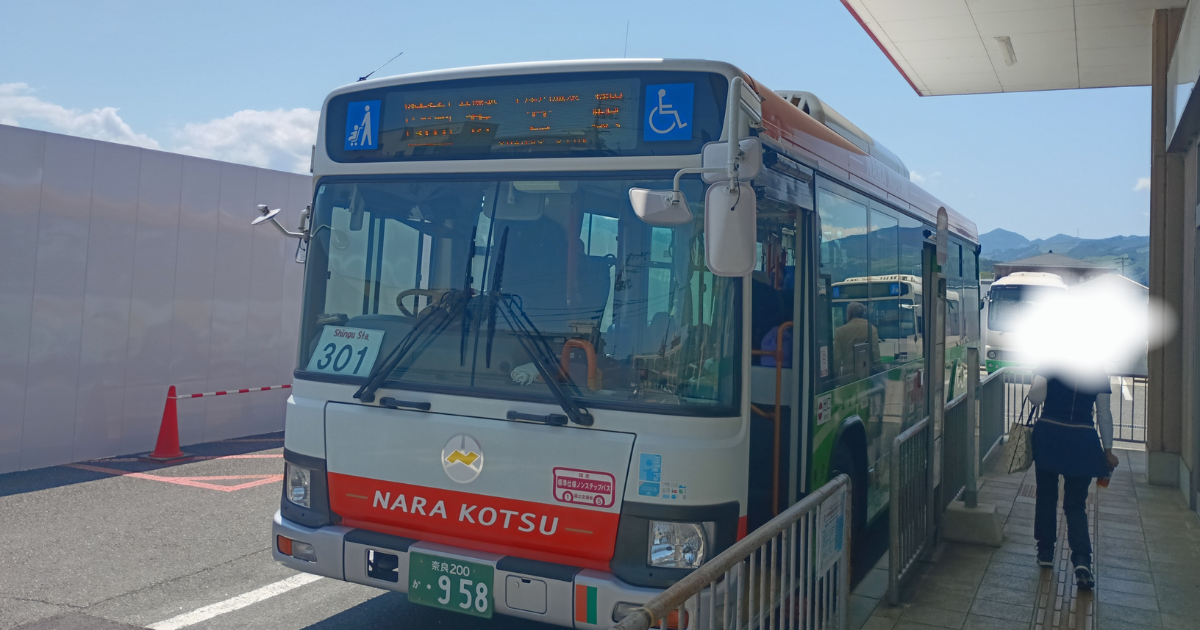
First, I’ll give you an overview of the Yagi-Shingu Line.
The Yagi-Shingu Line is one of the bus routes operated by Nara Kotsu.
・Total length: 169.3 km
・Travel time: Approximately 6.5 hours (depending on conditions)
・Total number of stops: 168
The route runs between Yamato-Yagi Station on the Kintetsu Osaka Line (Kashihara City, Nara Prefecture) and Shingu Station on the JR Kisei Main Line (Shingu City, Wakayama Prefecture).
Among local buses that do not use the highway,
it boasts the longest operating distance in Japan.
There are three round-trip trains per day.
After departing from Yamato-Yagi Station, the bus runs through the city for a while.
It is used not only by tourists but also by locals for short trips.
It passes through major Kintetsu and JR stations
which are located in Kashihara City, Yamatotakada City, Gose City, and Gojo City.
Once we pass through the downtown area of Gojo City,
we’re entering an area with absolutely no rail service.
We press on through secluded regions surrounded by majestic mountains.
Although this route tends to attract attention from tourists,
it also serves as a vital means of transportation for residents living in areas along the line that lack rail service.
Through the rugged mountain trails of the Kii Mountains
this bus takes us to JR Shingu Station in Shingu City, Wakayama Prefecture, which faces the Pacific Ocean.
There are plenty of sights to see along the line.
As far as I can think of, here is the list.
・Totsukawa Village, Japan’s largest village by area
・Tanise Suspension Bridge
・Totsukawa Onsen
・Kumano Pilgrimage Route: Kobenji
・Kumano Hongu Taisha Shrine
・Yunomine Onsen
・Kawayu Onsen
and so on
The purpose of this trip is・・・
to ride the entire length of the Yagi-Shingu Line.
As a result, I wasn’t able to take my time visiting each of the famous sights.
If I get another chance,
I’d like to get off at various stops along the way to visit the sights.
In the next section,
I will explain to you the fare for a direct ride from Yamato-Yagi Station to Shingu Station.
Fares on the Yagi-Shingu Line
To my readers,
I suppose the fare is what concerns you most.
Here is the fare:
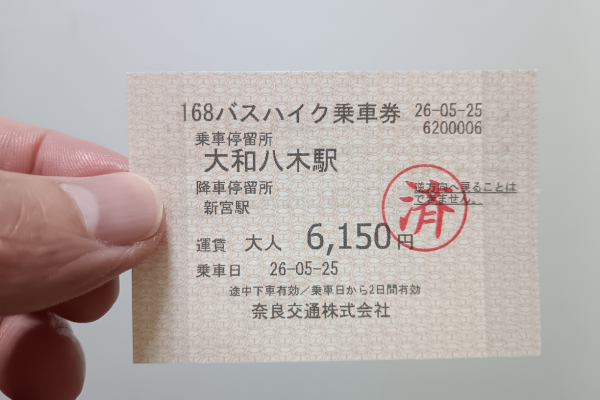
The price for adults is ¥6,150.
(When traveling from Yamato-Yagi Station to Shingu Station)
(As of May 2026)
You can pay with cash or transportation IC cards such as ICCOCA and SUICA, but
I, hiikun, purchased this ticket.
[168 Bus Hike Ticket]
I bought it to have proof that I rode the train.
It wasn’t until later that I realized how convenient this ticket was.
Directly below the date of travel,
it says,
“Intermediate stops permitted; valid for two days from the date of boarding”.
On certain sections,
you can get off at an intermediate stop.
Also, you can use the same ticket to board the next bus.
You won’t have to pay any additional fees at that time.
You can board using the same ticket.
However,
There’s no turning back.
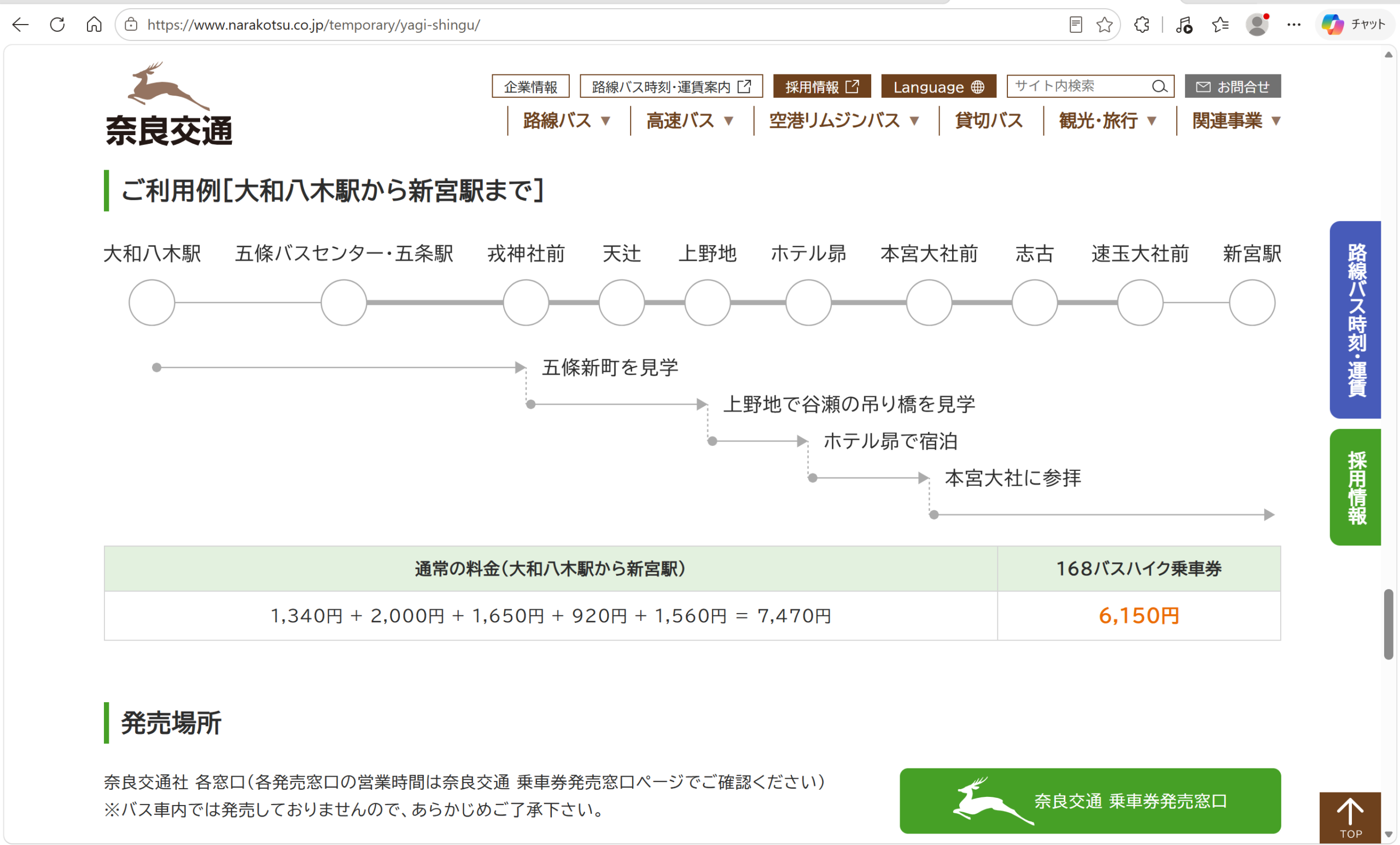
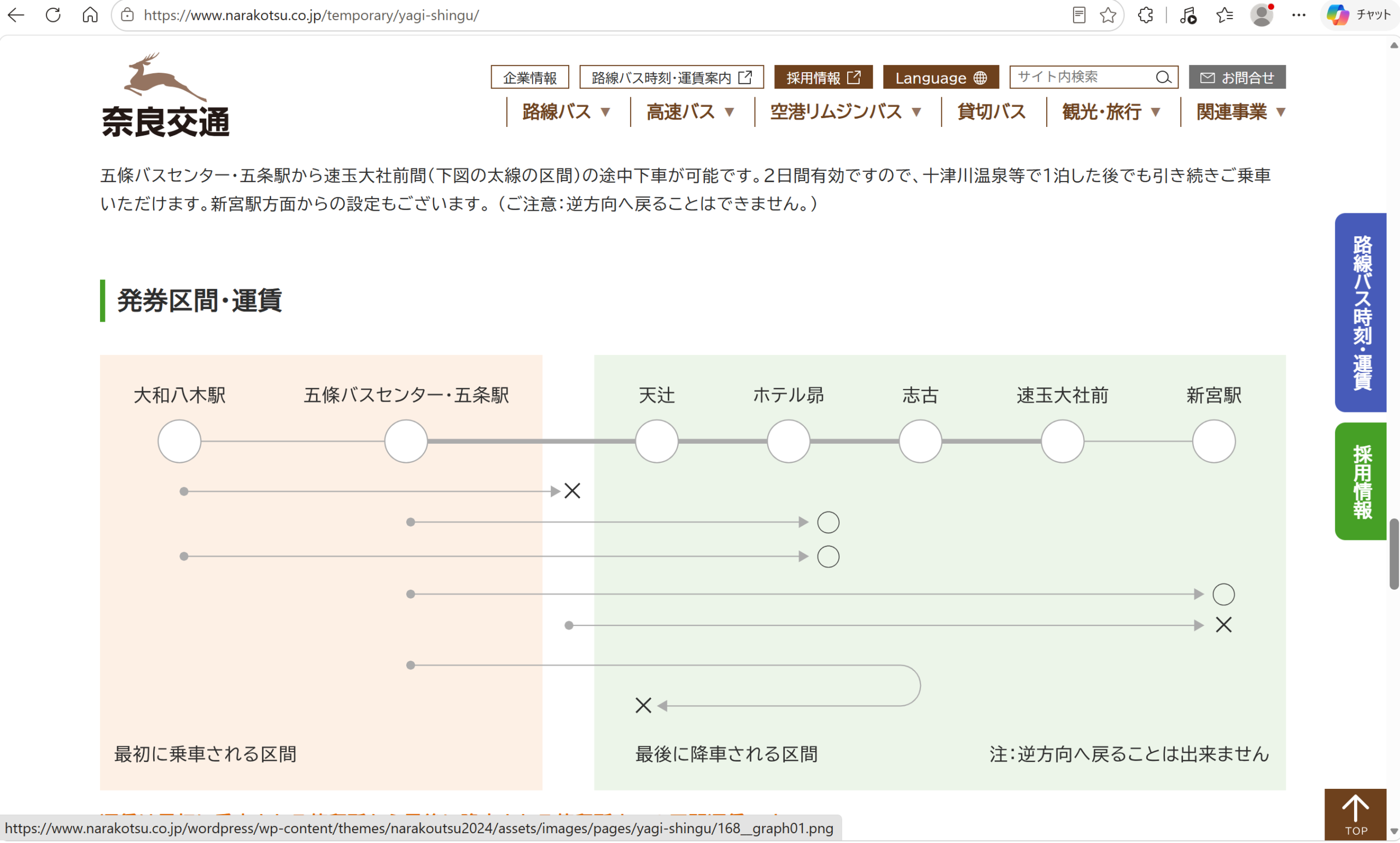
Source: Yagi-Shingu Limited Express Bus | Nara Kotsu Official Website
The image above shows an example of how to use the [168 Bus Hike Ticket].
Quoted from the Nara Kotsu official website.
As stated in the image below,
for example, you could stay overnight at an inn in Totsukawa Onsen.
You can use the same ticket to travel to Shingu Station the next day.
The section where you can get off midway is
from Gojo Bus Center and JR Gojo Station to Hayatama Taisha-mae.
The “Hayatama Taisha-mae” bus stop is located just a short distance from Shingu Station, the terminal stop.
As you can see, this ticket is valid over a very wide area.
For more details, please visit the official Nara Kotsu website.
Also, please ask a staff member directly when making your purchase.
Next time,
I’d definitely like to use this ticket to visit the famous sights
along the bus line.
From the next section,
let me show you what my trip was like.
A Day Trip on the Yagi-Shingu Line
Well then, let the journey begin.
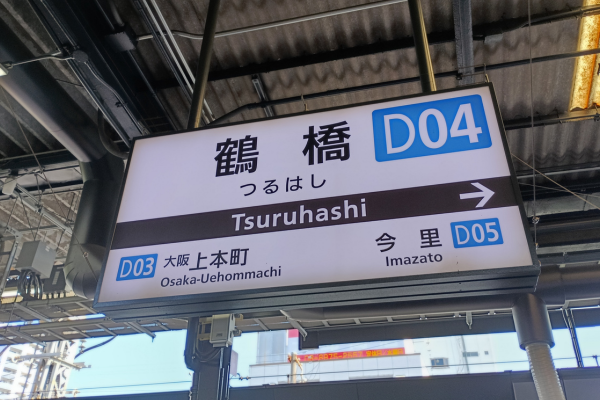
From Taisho, my hometown,
I boarded a train on the inner loop of the Osaka Loop Line
to Tsuruhashi Station.
From here, I’ll take the Kintetsu Osaka Line to Yamato-Yagi Station.
The Kintetsu Line starts at Osaka-Namba Station.
However, please note that, with the exception of some limited-express trains,
the Kintetsu Osaka Line departs from Osaka-Uehonmachi Station, which is one stop before Tsuruhashi.
Since it was right in the middle of the morning rush hour for commuters and students
the station was crowded with people.
It takes about 30 minutes to get to Yamato-Yagi Station by express train from this station.
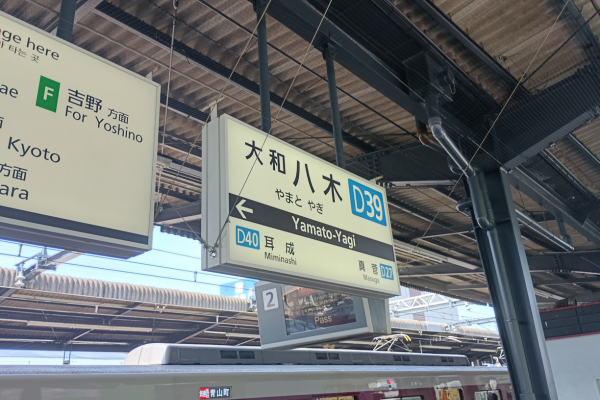
I arrived at Yamato-Yagi Station.
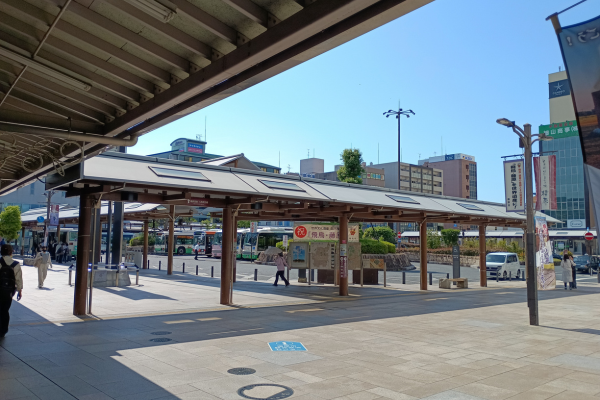
Once you exit the ticket gates, you’ll see the bus terminal on your right.
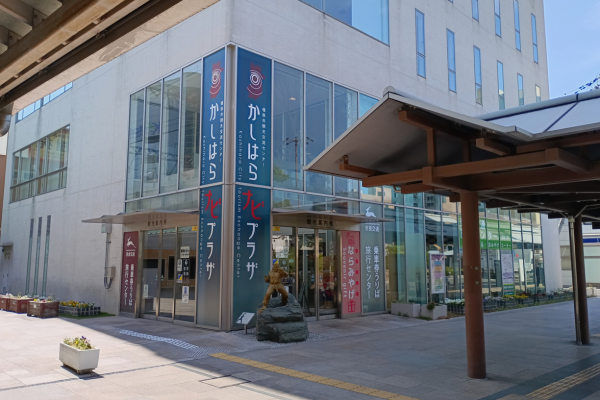
On the first floor of this building, located at the back of the bus terminal,
you can find the Nara Kotsu bus ticket office here.
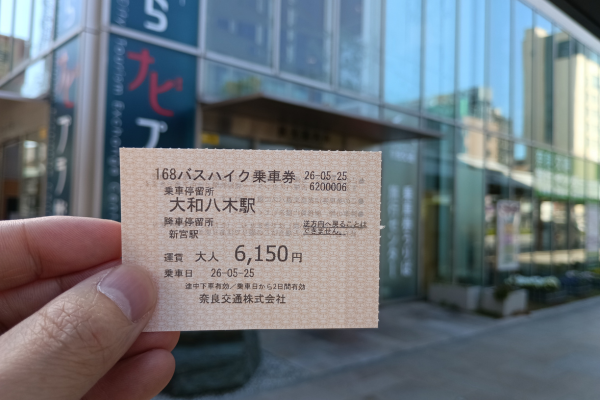
As mentioned in the previous section
I purchased a [168 Bus Hike Ticket].
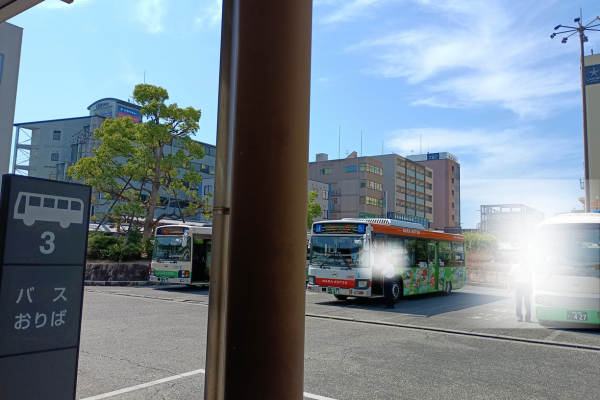
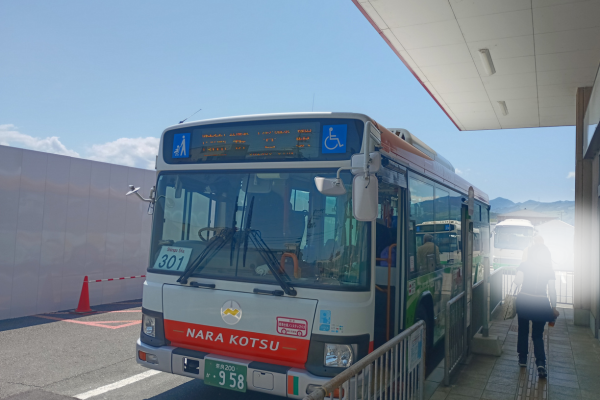
The bus I was going to take was already waiting.
I board the bus with the flashy design
that’s parked in the middle.
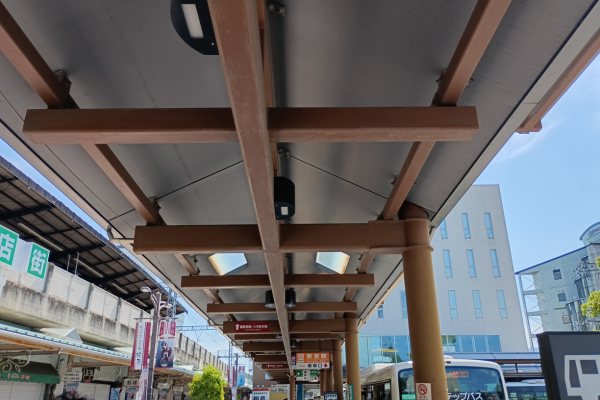
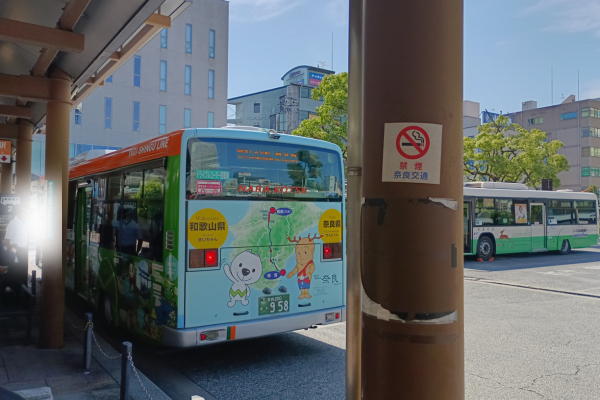
There were already more than a dozen passengers in line.
I was worried I wouldn’t be able to sit down.
I managed to snag a window seat on the right side.
However, by choosing this seat,
I never would have imagined at the time that I would face such a problem.
I’ll get back to you on that later.
Anyway, since I managed to secure a seat,
at that point, I felt relieved.
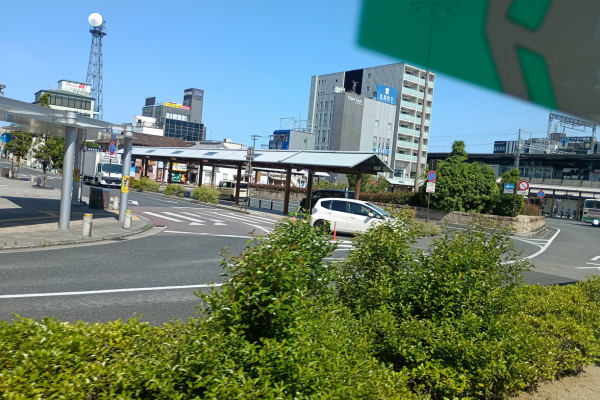
The train departs from Yamato-Yagi Station at 9:15 a.m. right on schedule.
The journey on Japan’s longest bus route has begun.
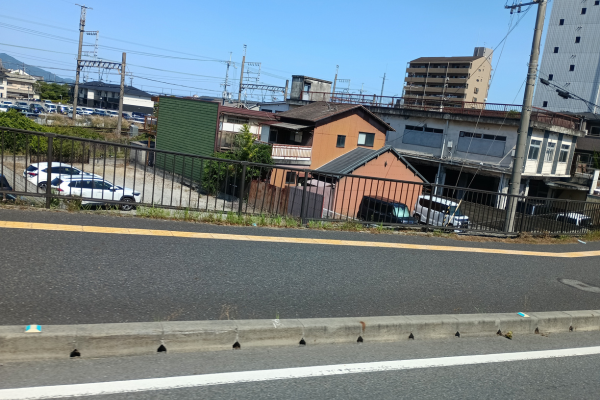
For the time being,
the bus passes through the downtown areas of Kashihara, Yamatotakada, Gose, and Gojo.
Apart from passengers traveling all the way to Shingu,
local residents were also riding the train for short trips.
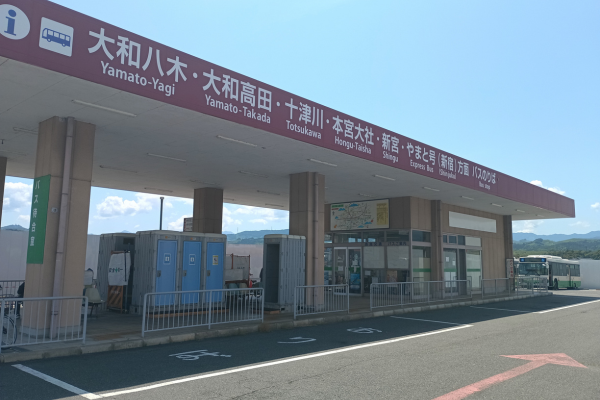
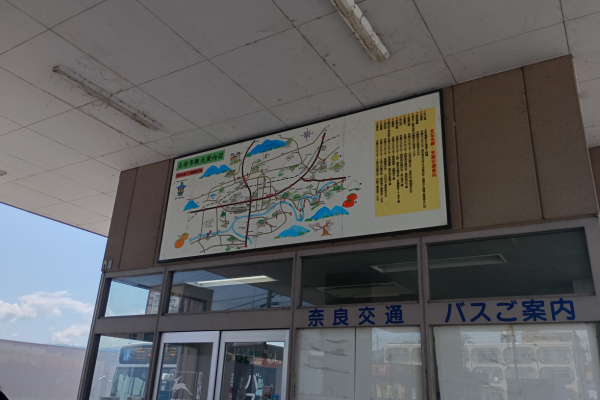
About 1 hour and 20 minutes from Yamato-Yagi Station,
we arrived at Gojo Bus Center.
We’ll take a 10-minute break.
The Yagi-Shingu Line continues from here and
take a break
at the Uenochi and Totsukawa Onsen bus stops.
That means we will take a total of three breaks.
During the break
please be sure to to to the bathroom and
pick up some drinks and food at a nearby store.
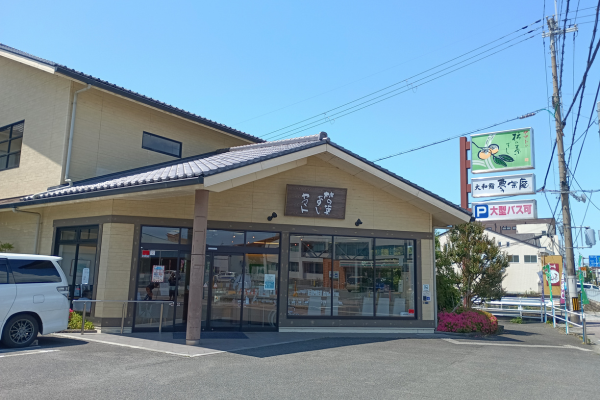
When you think of Nara, persimmon-leaf sushi comes to mind.
There is a specialty shop for persimmon-leaf sushi (kakinohazushi) which is located just a one-minute walk from Gojo Bus Center
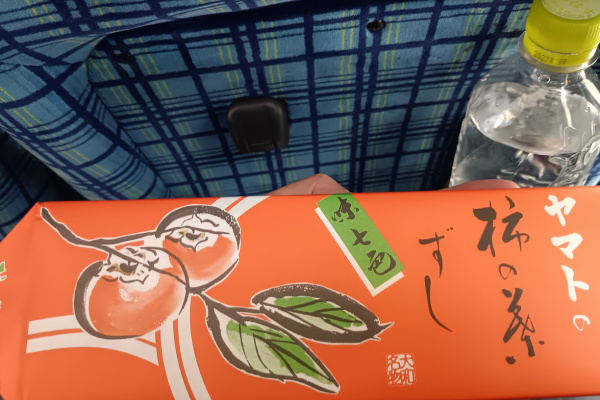
I bought a box of persimmon-leaf sushi at Yamato, a specialty shop for persimmon-leaf sushi.
Since the break is only 10 minutes long,
as soon as I got off the bus, I ran to the store.
After making the purchase, I bought some water at a nearby 7-Eleven.
I used the restroom there and ran back to the bus.
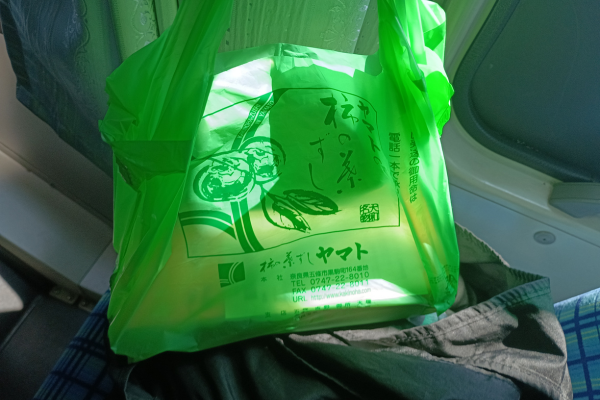
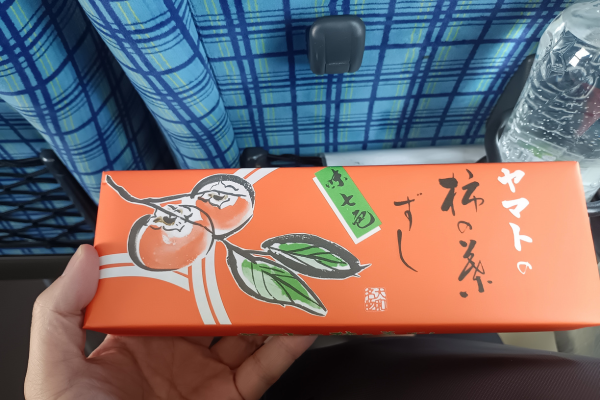
Here is the persimmon-leaf sushi I bought.
I’ll show you what’s inside later.
Here, we’ll also introduce the seats inside the vehicle.
It looks like a perfectly ordinary local bus.
The interior is designed for long-distance travel.
Regarding seating,
it has a high backrest and a cup holder on the back.
Unfortunately, it does not have a reclining feature.
Even so, it was quite comfortable to sit in.
Of course, whether people feel that way varies from person to person.
So if you’re worried,
you might want to bring a cushion that suits you.
There were actually a few passengers who did just that.
Also, if you’re worried about motion sickness,
I also recommend taking some motion sickness medication beforehand.
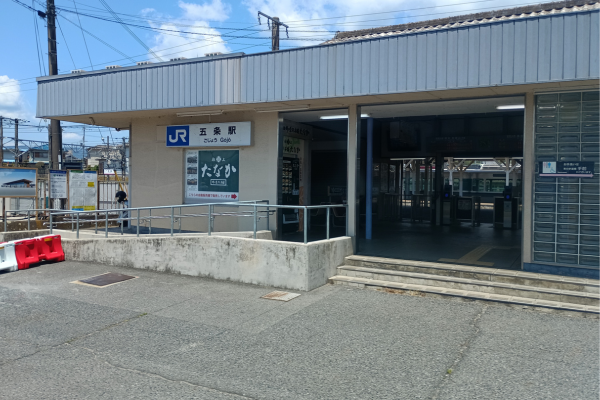
The first stop after departing from Gojo Bus Center,
this is Gojo Station on the JR Wakayama Line.
Two passengers who appeared to be tourists also boarded here.
From this stop onward,
the train does not stop at any other stations on the way to the final stop, Shingu Station.
From now on,
we are entering a long, long stretch with absolutely no rail service.
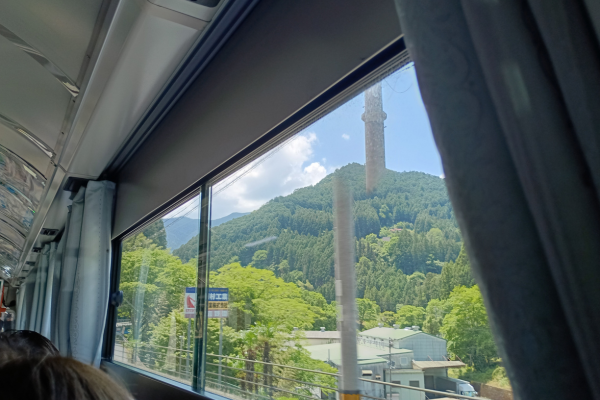
A short while after leaving JR Gojo Station,
the scenery changes completely.
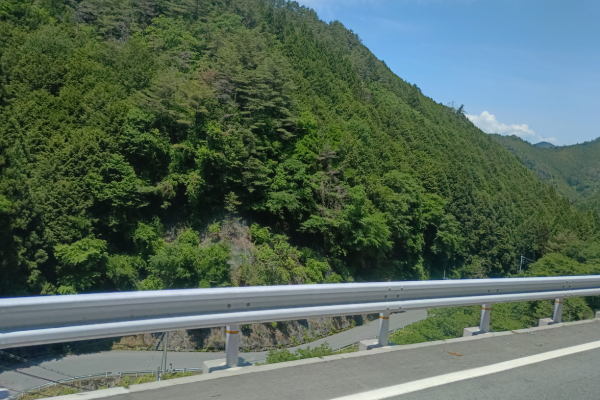
We press on along the road surrounded by the rugged mountains of the Kii Mountains.
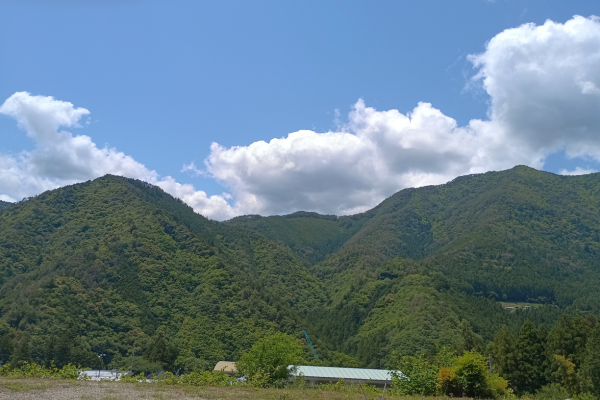
It’s a beautiful blue sky.
We were really lucky with the weather.
It’s a perfect day for a bus trip.
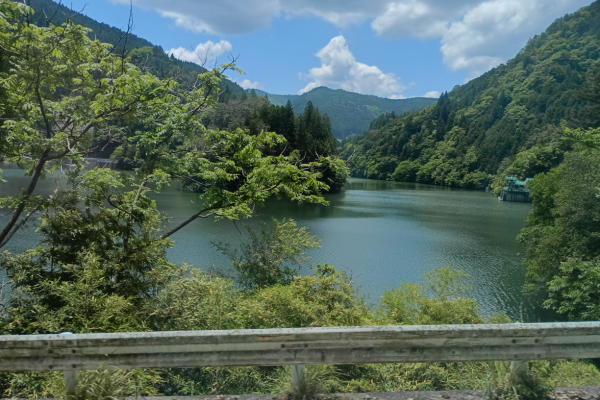
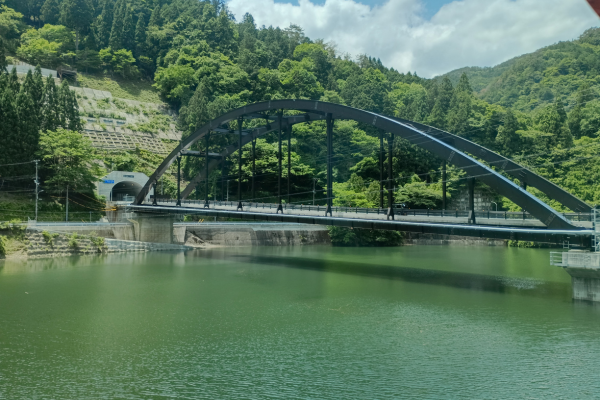
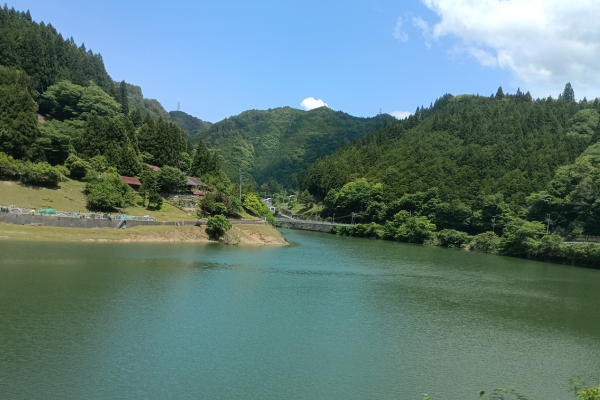
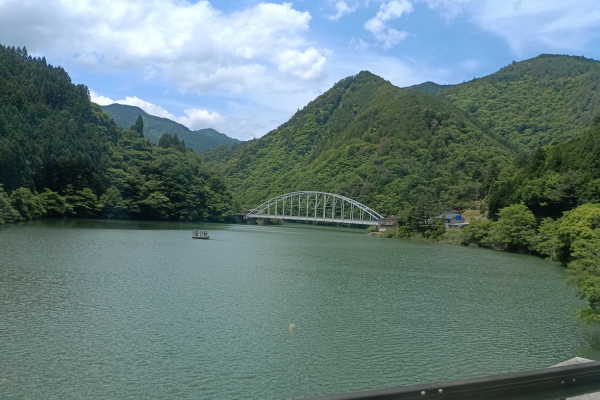
The scenery along the route was absolutely beautiful.
The bus’s public address system also provided information on sightseeing spots along the route.
On top of that, the driver gave us a guided tour while driving.
We enjoyed the scenery while listening to his tour guide’s commentary.
There was one particularly interesting point in the tour commentary provided by the bus driver.
So let me introduce you.
This is regarding the “Goshinsen Plan.”
The Goshin Line is a railway line connecting Gojo Station on the JR Wakayama Line and Shingu Station on the JR Kisei Main Line.
This was a railway line that had been planned by the Japanese National Railways (now JR) since before the war.
However, the plan was canceled due to the chaos caused by the war.
Postwar construction work was carried out.
Due to various factors, including the JNR’s deficit,
construction has been halted, and the project has been put on hold.
It truly is a legendary railway line.
Thanks to the driver’s tour commentary,
I learned about the Goshin Line project for the first time.
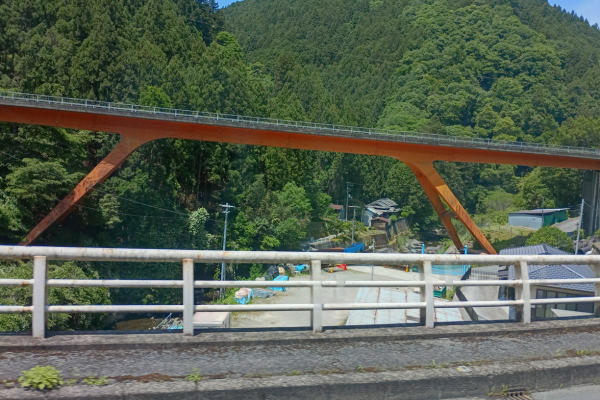
This is the bridge that was supposed to be used on the Goshin Line.
It remains in quite good condition to this day.
If the Goshin Line had opened,
what would the traffic have been like in this area?
As I let my thoughts wander to that legendary railway line, the Goshin Line,
the bus continues south.
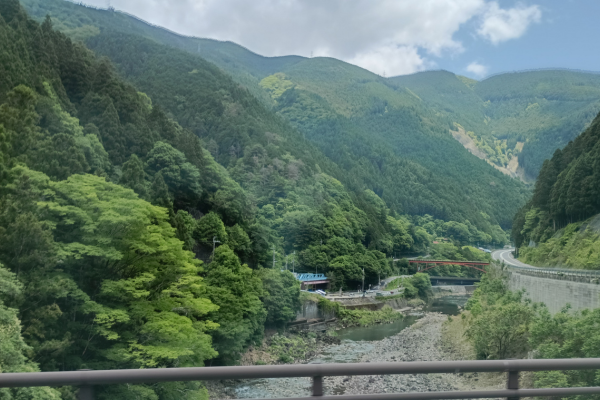
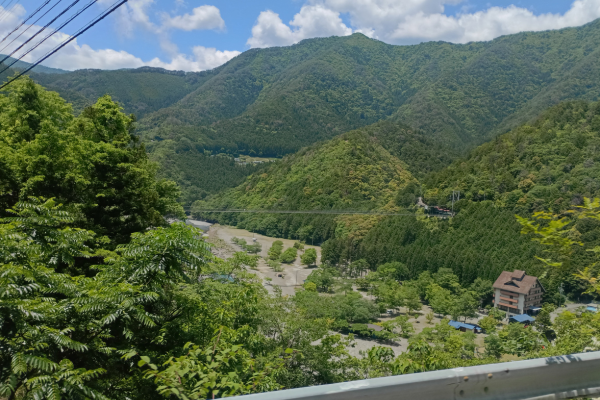
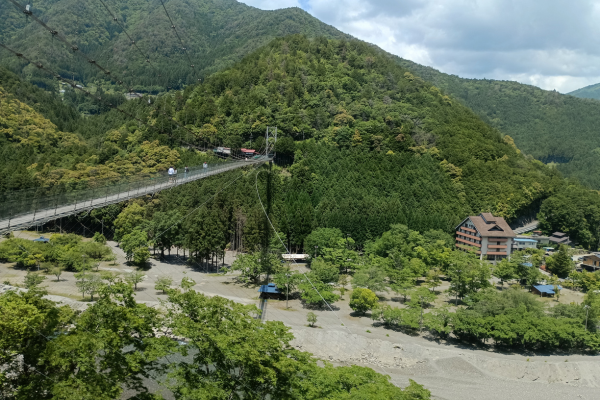
It was about two hours since we left Gojo Bus Center.
A long suspension bridge came into view.
Near that suspension bridge,
the next rest stop is coming up.
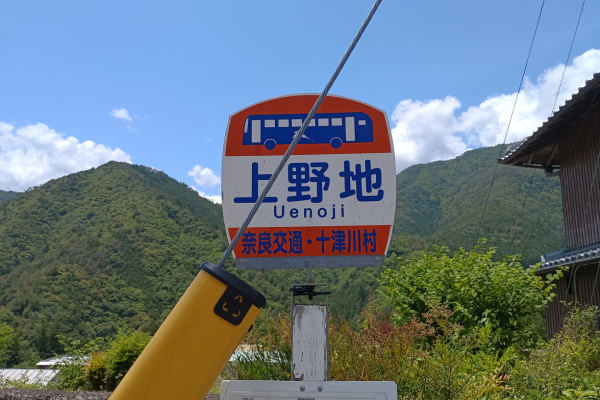
We arrived at the Uenoji stop.
We’ll take a 20-minute break now.
I’ve finally arrived in Totsukawa Village, Yoshino District, Nara Prefecture —the largest municipality in Japan by area.
Since it’s a place I’ve wanted to visit for a while,
I was truly moved.
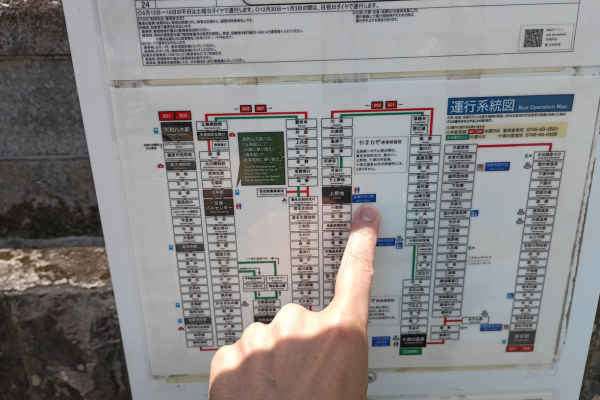
In terms of the number of bus stops,
it looks like we’re about halfway done.
However, there is still a long way to go before we reach our final destination, Shingu Station.
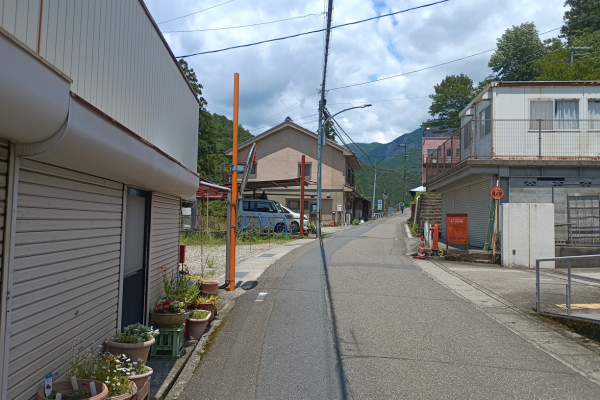
Just a short walk from the bus stop…
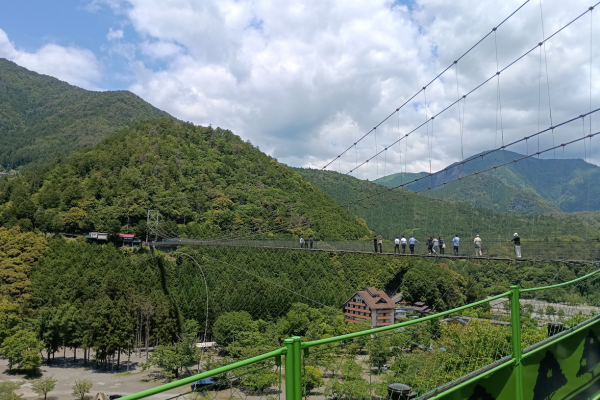
you can see it.
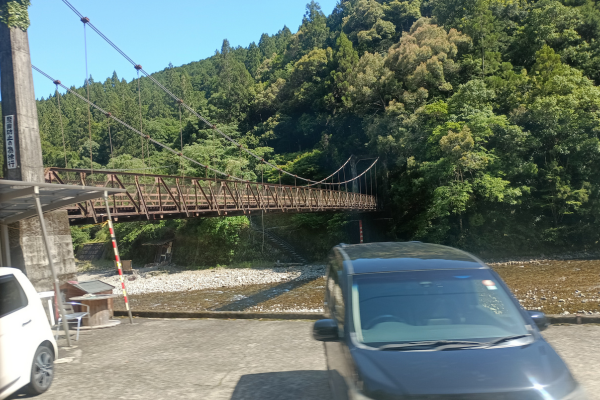
This is the famous “Tanise Suspension Bridge.”
This is one of the places I most wanted to visit while traveling along the Yagi-Shingu Line.
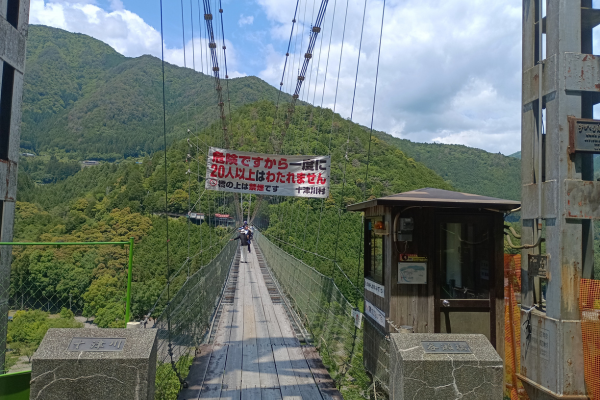
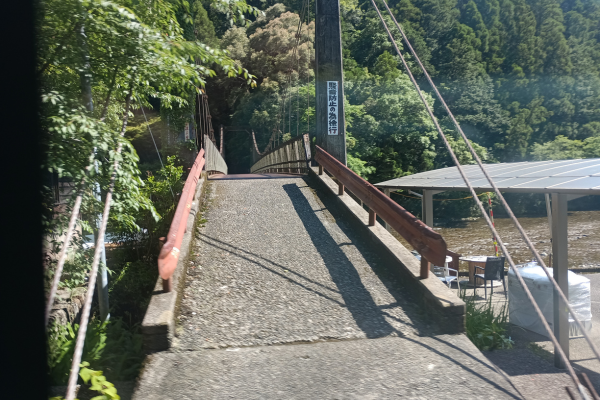
“For safety reasons, no more than 20 people may cross at a time,” There is a warning sign that says this.
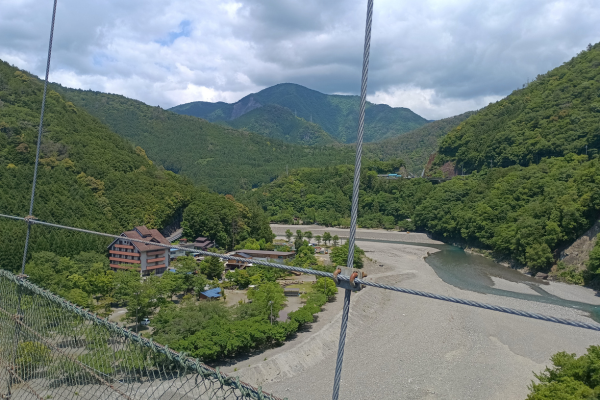
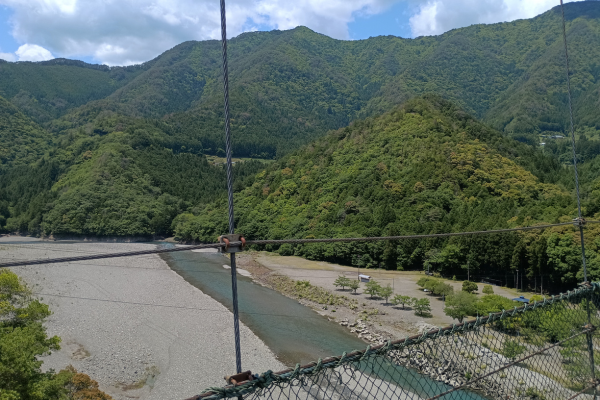
Due to time constraints,
I wasn’t able to make it all the way across the bridge.
I’m almost halfway done.
The bridge swayed more than I expected, which was scary.
But the view is amazing.
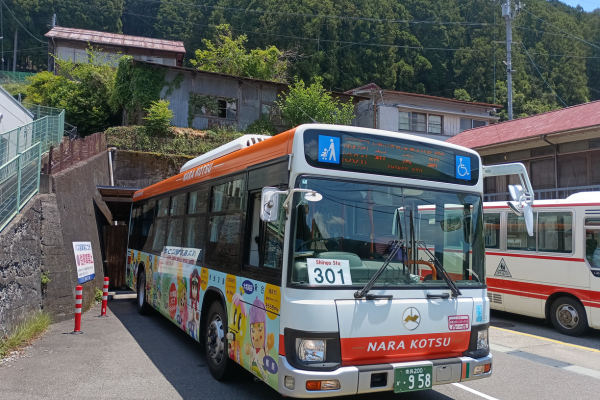
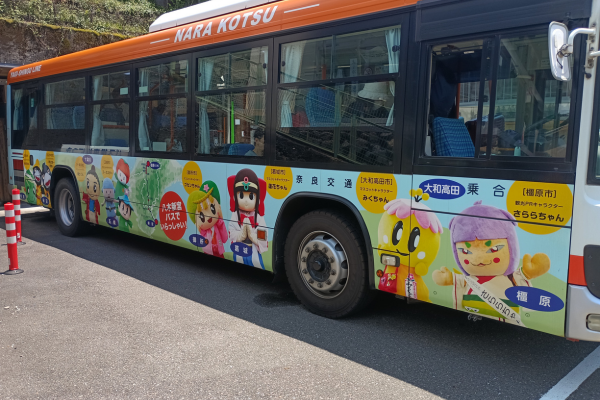
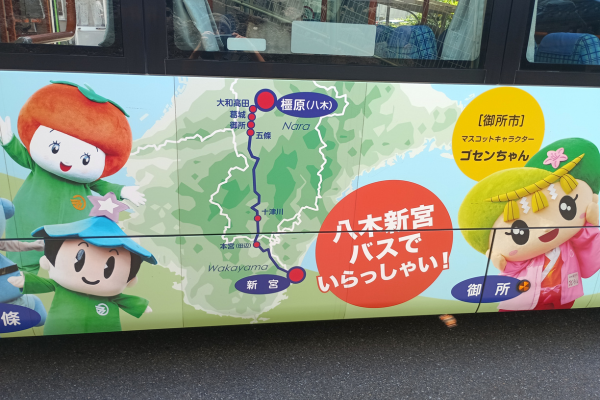
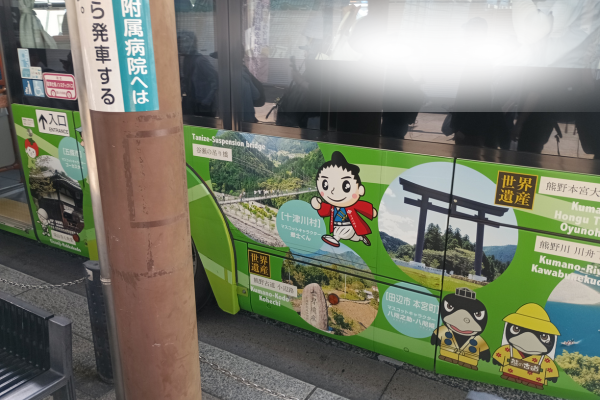
On the side of the bus,
it features the mascot characters of the areas along the line.
They’re all so cute.
I hope all of you readers will take a bus and explore the different regions.
The 20-minute break is over.
We’re heading to our next destination.
I’m starting to get hungry.
Well, it’s time for lunch.
Let’s eat the persimmon-leaf sushi I bought.
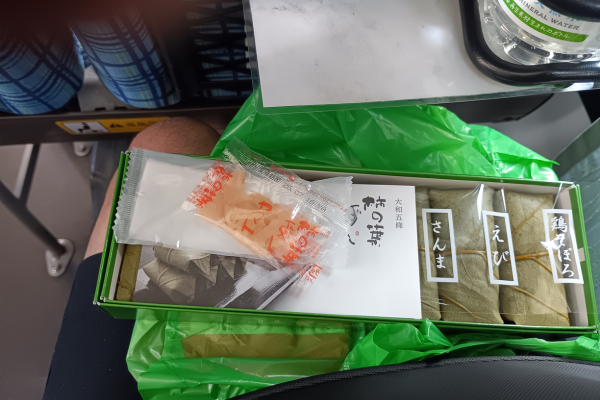
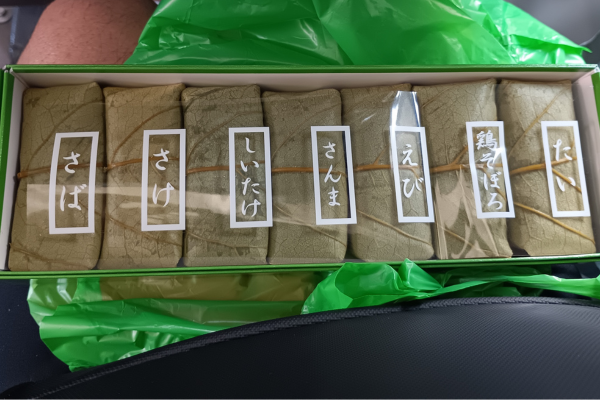
There are seven pieces of sushi in the box.
Since the sushi toppings are listed on the labels,
you will not be lost.
It also comes with ginger.
It’s the perfect palate cleanser.
Let’s eat them starting from the right.
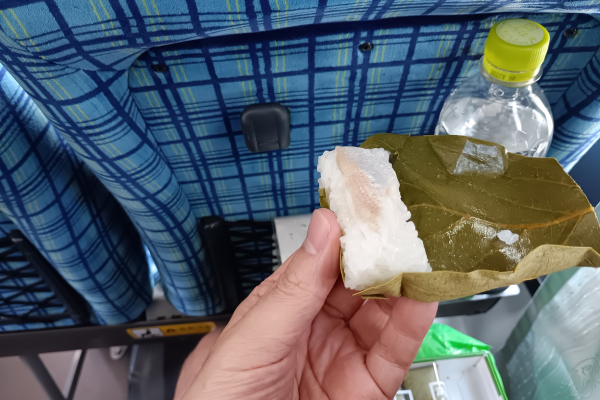
Sea bream
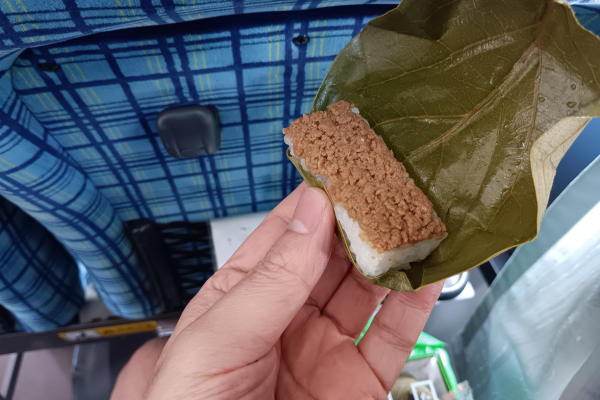
Chicken mince
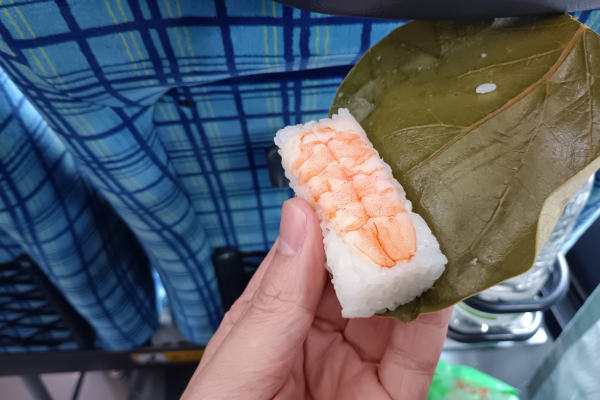
Shrimp
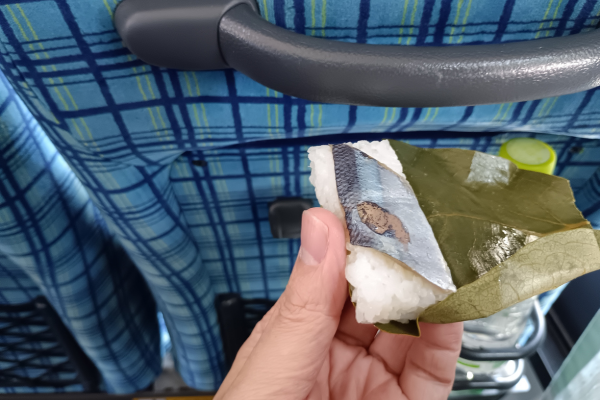
Pacific saury
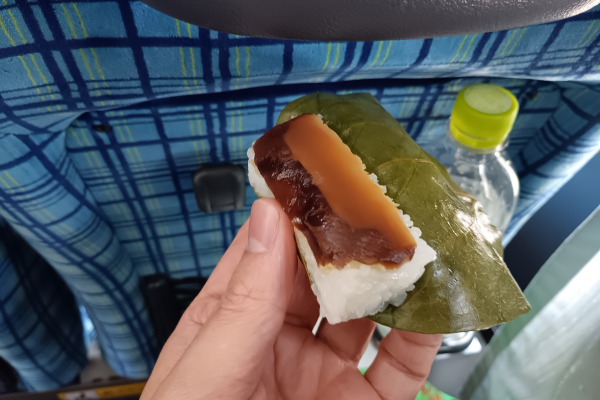
Shiitake mushroom
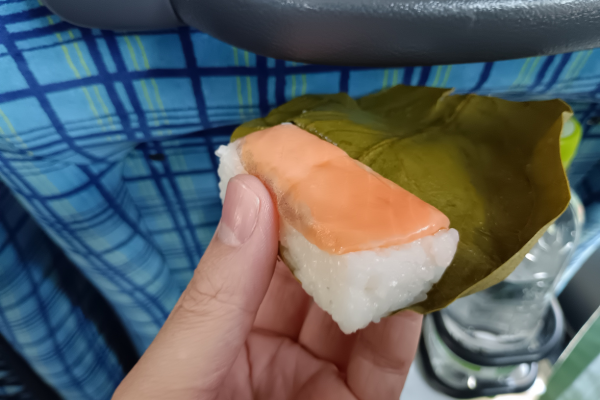
Salmon
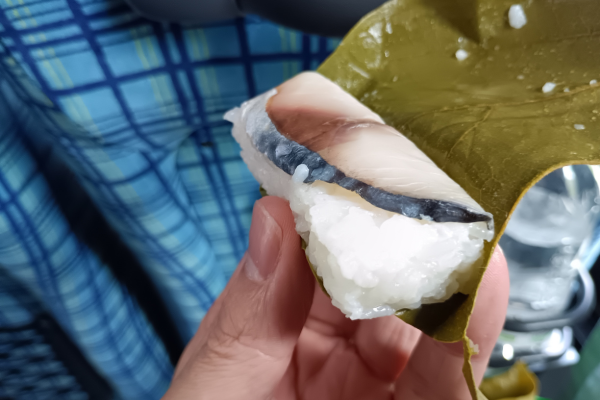
Mackerel
All seven were delicious.
Not only is the sushi rice well-seasoned, but the toppings are too, so
You don’t need soy sauce or wasabi.
The salmon was especially delicious.
When traveling on the Yagi-Shingu Line,
please be sure to try Yamato’s persimmon-leaf sushi.
Highly recommended!
Thanks for the food. Gochisousamadeshita.
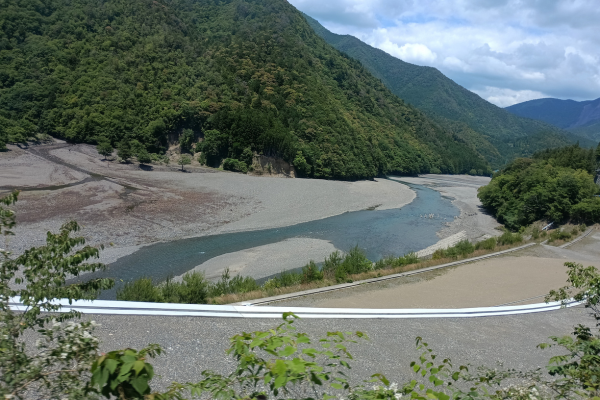
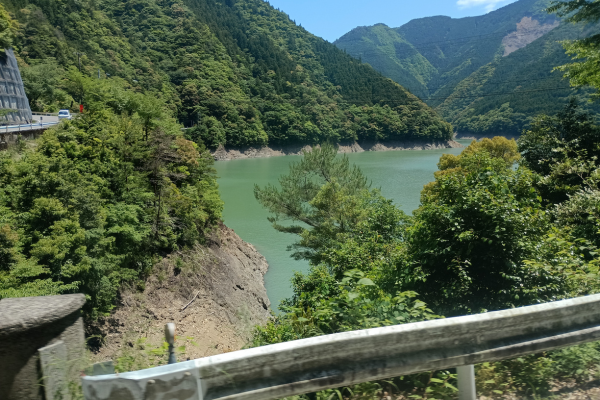
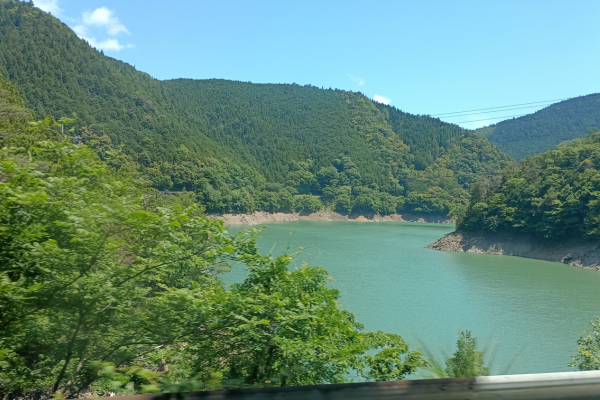
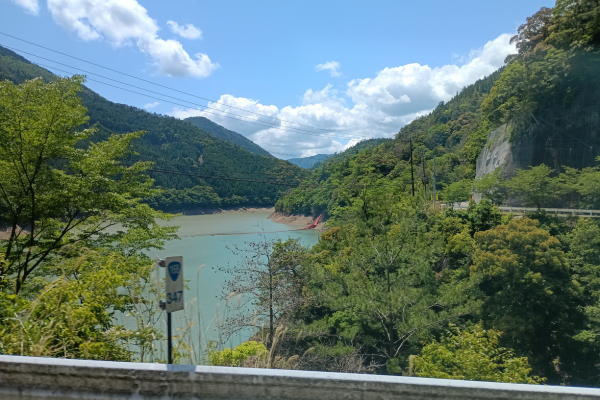
The breathtaking scenery stretches on and on.
The majestic natural scenery, which I’d never see in downtown Osaka, is truly soothing.
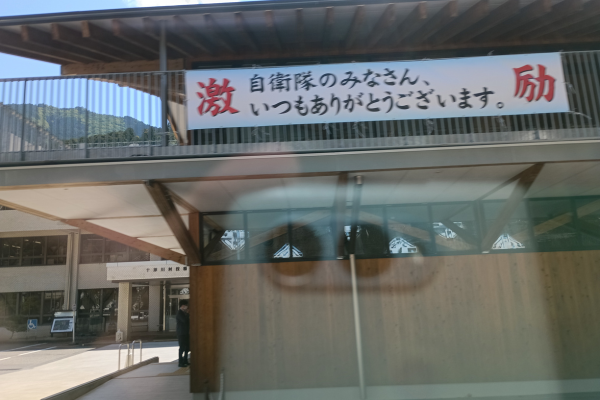
qI saw a banner that read, “Thank you for your support, members of the Self-Defense Forces.”
I really think so.
To all members of the Self-Defense Forces,
we would like to express our gratitude for your dedicated efforts
not only in national defense but also in rescuing residents and restoring critical infrastructure in the event of a natural disaster.
Thank you so much.
My phone ended up in the shot.
I’m sorry my photography skills aren’t very good.
Once you pass that banner…
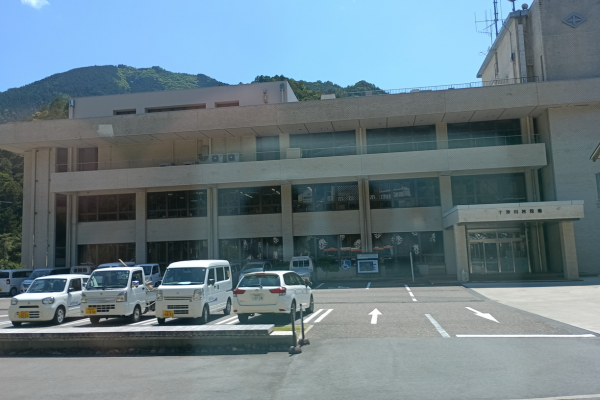
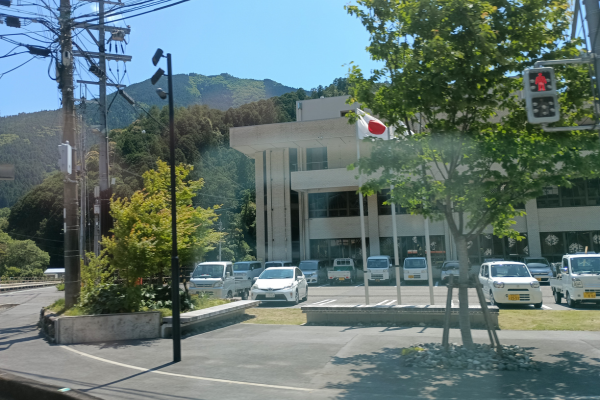
What came into view was,
This is the Totsukawa Village Office.
There is a bus stop for the Totsukawa Village Office in this area.
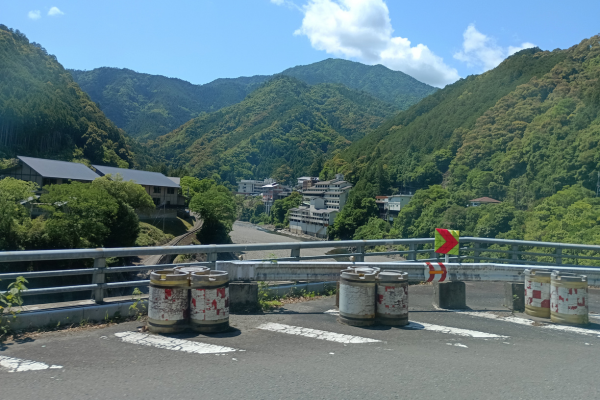
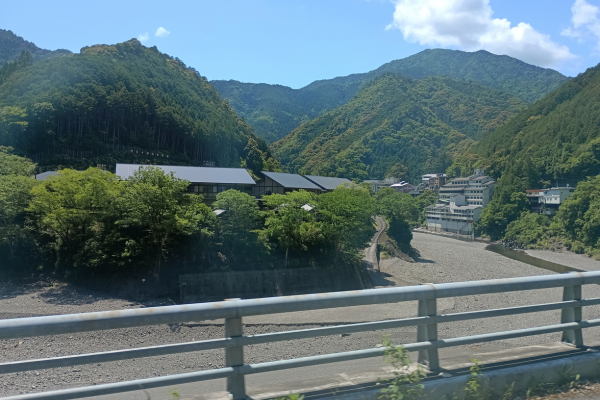
About 30 minutes from the Totsukawa Village Office bus stop,
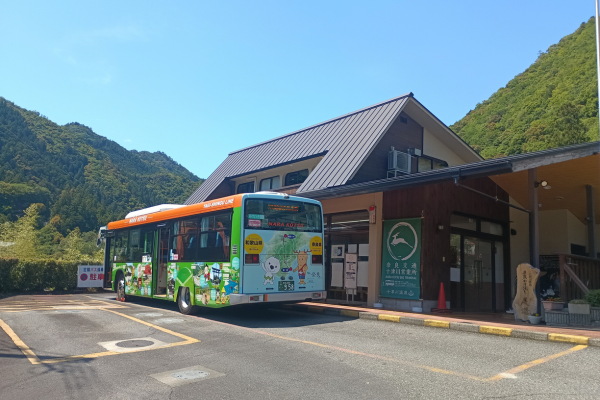
We’ve arrived at our final stop, the Totsukawa Onsen bus stop.
We’ll take a 10-minute break now.
The building behind the bus is,
the Nara Kotsu Totsukawa Branch.
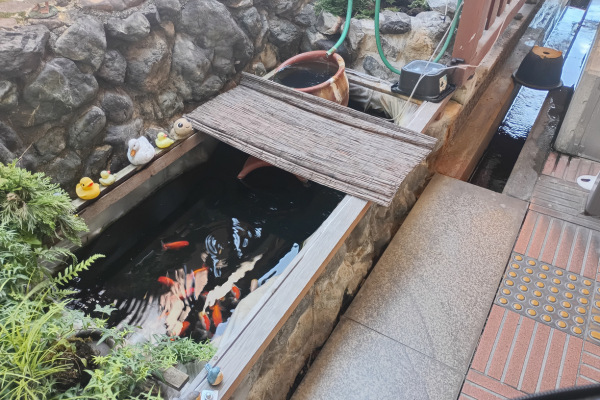
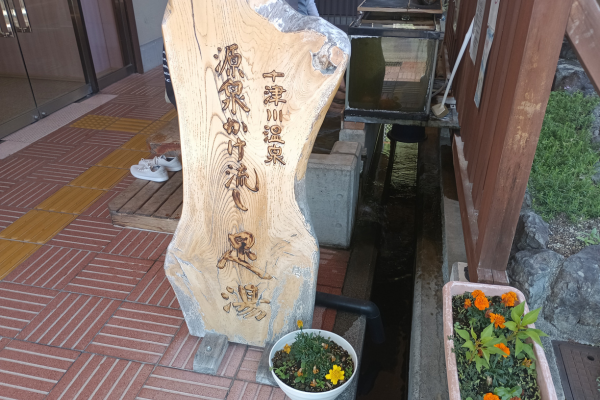
A foot bath has been set up near the entrance and exit of the Totsukawa Branch Office.
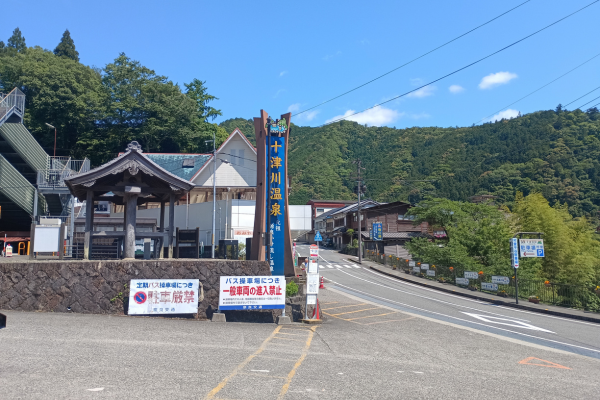
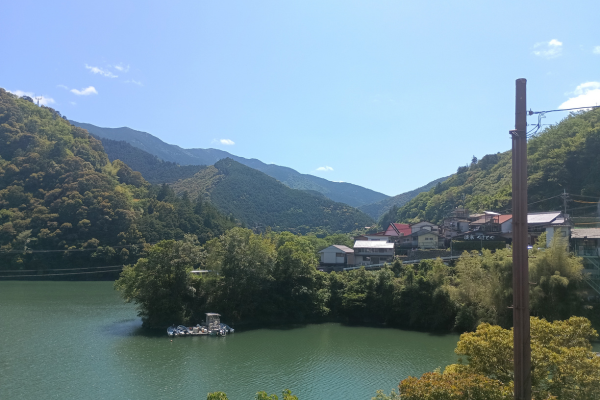
This is the view in front of the Totsukawa Branch Office.
Not only is the scenery beautiful, but…
The air is fresh.
When I look at the beautiful scenery
The 10-minute break flew by.
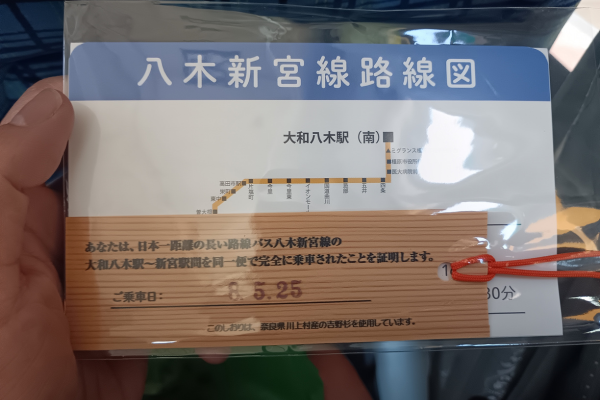
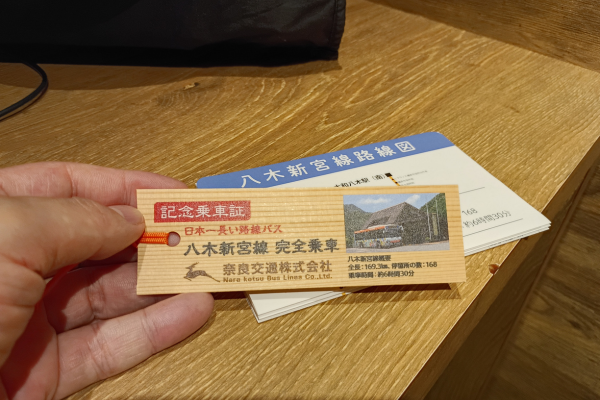
Just before departure, the bus driver gave us a commemorative boarding pass.
You can use this commemorative ticket as a bookmark.
It is made from Yoshino cedar sourced from Kawakami Village in Yoshino District, Nara Prefecture.
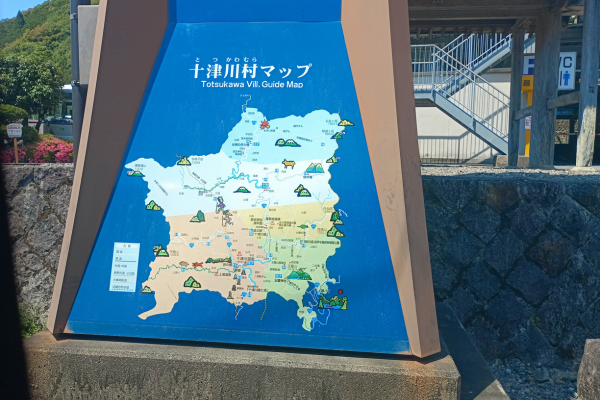
Here is a map of Totsukawa Village.
I took this photo from inside the bus right after it pulled away.
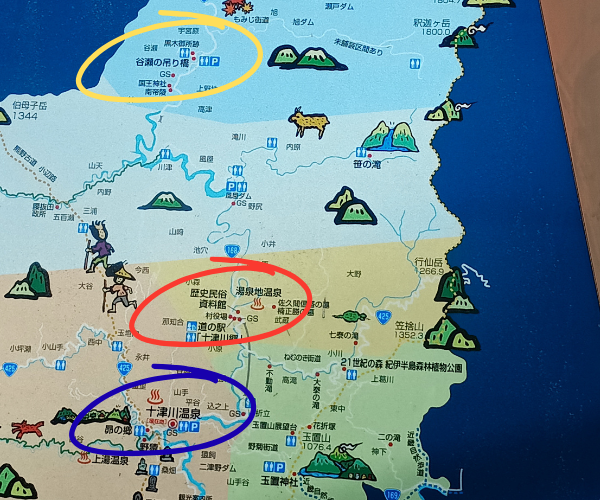
The yellow circle marks the Ueno-aji bus stop, where the Tanise Suspension Bridge is located.
The red circle marks the location of the Totsukawa Village Office.
And the blue circle marks the Totsukawa Onsen bus stop.
Looking at it this way, you can see that we’ve traveled quite a distance south from Totsukawa Village.
The trip is now entering its second half.
Shortly after leaving the Totsukawa Onsen bus stop,
the bus is finally entering Wakayama Prefecture.
There are still plenty more sights to see.
First, here is…
This is Kumano Hongu Taisha.
Even though it’s deep in the mountains,
it was bustling with a huge number of tourists.
I could see the famous large torii gate on my left.
Unfortunately, because I was sitting in a bad spot,
I wasn’t able to take a picture.
Even so, I was able to see it clearly.
I’ve always been interested in Kumano Hongu Taisha.
I definitely want to visit there in the future.
By the way, there are several bus routes to Kumano Hongu Taisha besides the Nara Kotsu Yagi-Shingu Line.
For more details, please visit this page.
Even after passing Kumano Hongu Taisha,
there are still plenty more sights to see.
Those are Yunomine Onsen and Kawayu Onsen.
In the areas around each bus stop are,
there are several hot spring inns lined up side by side,
The streetscape that is antique, charming and beautiful is very impressive.
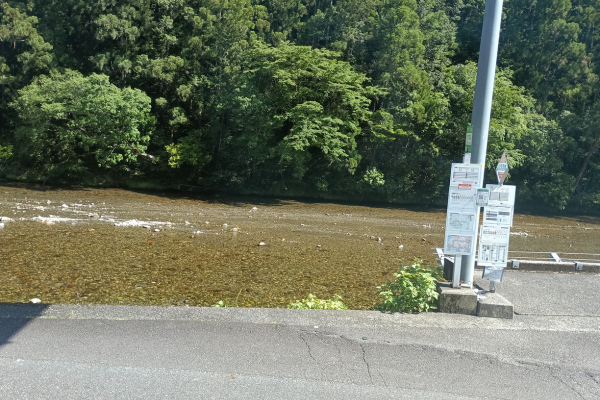
This is the Ōtō River, which flows near the Kawayu Onsen bus stop.
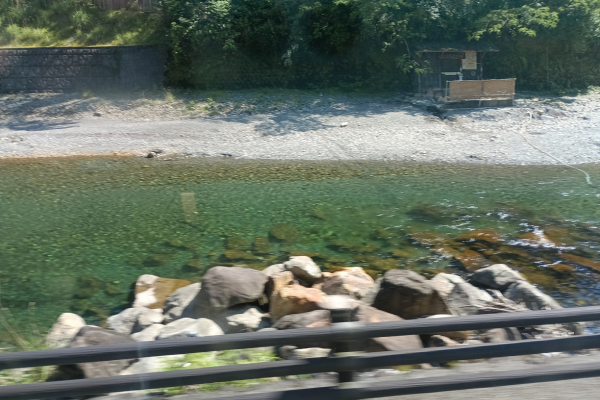
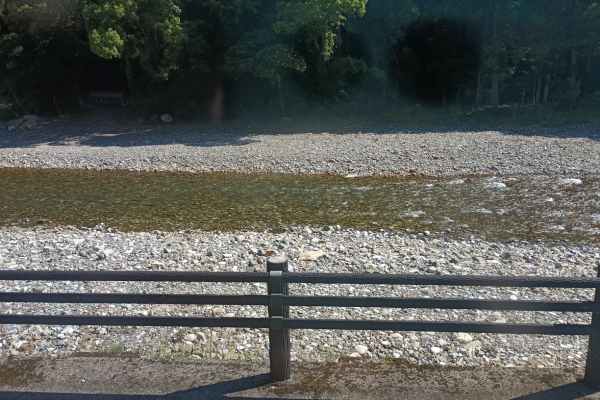
Even from the bus window
the river is so clear you can see right to the bottom.
According to information on the official Kawayu Onsen website,
apparently, hot spring water at temperatures exceeding 70 degrees Celsius is constantly bubbling up from the riverbed.
When the hot spring water mixes with the river water,
it brings the water to just the right temperature.
By digging along the riverbank,
you can have a private open-air bath.
Next time I visit this place,
I would love to try it.
I actually wanted to take photos of the scenery on the left side of the train window at both Yunomine Onsen and Kawayu Onsen, but,
Unfortunately, it wasn’t possible because all the seats were taken.
But since I was able to etch the image into my memory, I’ll call it a win.
Leaving Kawayu Onsen behind,
we continue heading south.
The trip is finally coming to an end.
The highlight of this trip is,
The Kumano River.
After passing Kawayu Onsen,
all the way to the outskirts of Shingu,
the bus speeds along the Kumano River.
“Huh? Hey, hiikun, where are the photos of the Kumano River?”
To all readers who felt that way,
I apologize for the inconvenience.
I wasn’t able to take any photos of the Kumano River.
I, hiikun, was sitting by the window on the right side of the vehicle.
However, the Kumano River was on the left side of the road.
On top of that, since the seats were all taken, I couldn’t move.
As a result, I wasn’t able to take any photos of the Kumano River.
Do you remember what I mentioned at the beginning of this section?
“I managed to snag a window seat on the right side.
However, I never imagined at the time that choosing this seat would lead to a problem.”
There is one thing I regret about this trip.
That means I ended up sitting in the seat on the right.
To sum up,
if I wanted to enjoy the spectacular views at each attraction even more,
and if I wanted to capture the stunning views at each of these famous spots in photos,
I think I would have preferred a seat on the left side of the bus, facing the direction of travel.
・The Great Torii Gate of Kumano Hongu Taisha Shrine
・The picturesque scenery of Yunomine Onsen and Kawayu Onsen
・Kumano River
and so on
If I had sat on the left side,
I would have taken the time to enjoy the scenery more.
I wasn’t able to capture it in a photo, but,
I was able to take in the sights of each famous spot.
Even though I was sitting on the right,
I could clearly see the beautiful Kumano River on the left side of the bus window.
The water was so clear that I could see the riverbed.
From the bus window
I wasn’t able to capture the highlight of this trip—the Kumano River—in photos.
I was a little disappointed.
That said, I have absolutely no intention of suggesting that the trip itself was boring.
I had a great time.
After all, I was finally able to take the trip I’d wanted to take for so many years.
There were so many breathtaking views that I could only see because I was sitting on the right side.
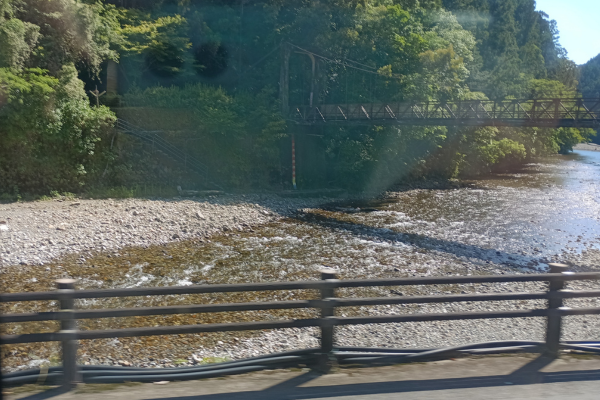
For example, because I was sitting on the right side, I was able to take a photo of the Tanise Suspension Bridge through the train window.
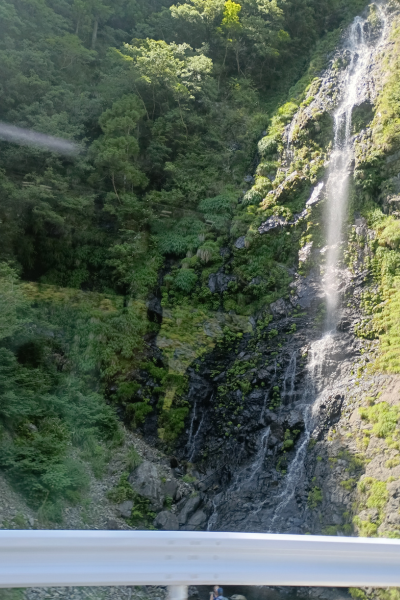
I also saw small waterfalls like this along the route.
I can just do what didn’t work out this time
the next time I visit.
The purpose of this trip is to fully enjoy the bus journey, and,
It’s not about taking pictures.
With that positive mindset,
I headed to the final stop, JR Shingu Station.
*For more information about the Kumano River, please visit the official website of the Ministry of Land, Infrastructure, Transport and Tourism.
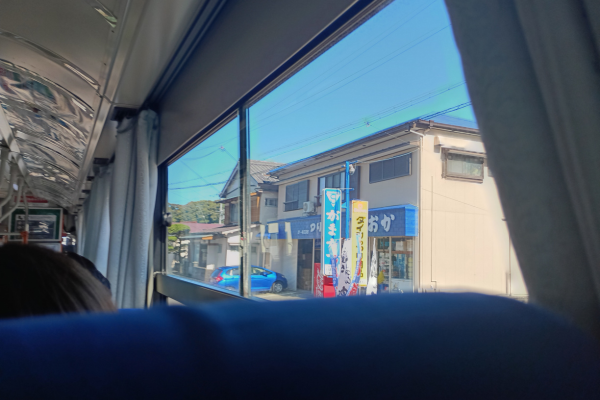
We finally entered the downtown area of Shingu.
We’ll be arriving at the final stop shortly.
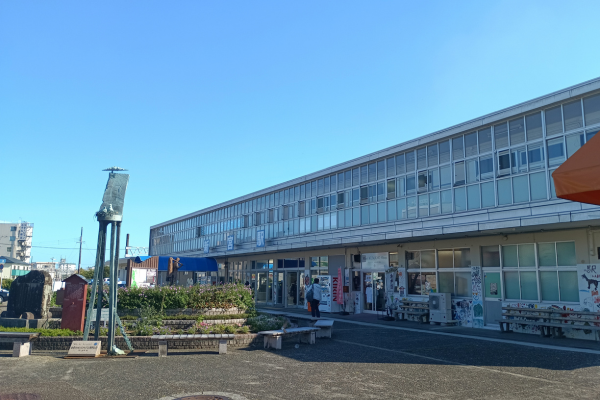
3:55 p.m.,
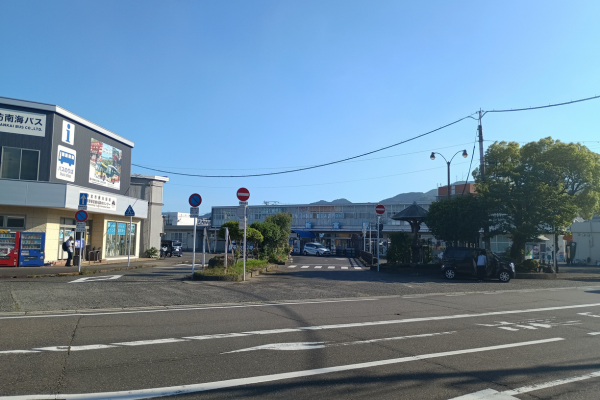
The bus arrived at its final stop, JR Shingu Station.
And so, our enjoyable 6-hour-and-40-minute bus trip came to an end.
I’ve come to Shingu, the farthest corner of the Kansai region, for the first time.
The moment I got off the bus, I was really moved.
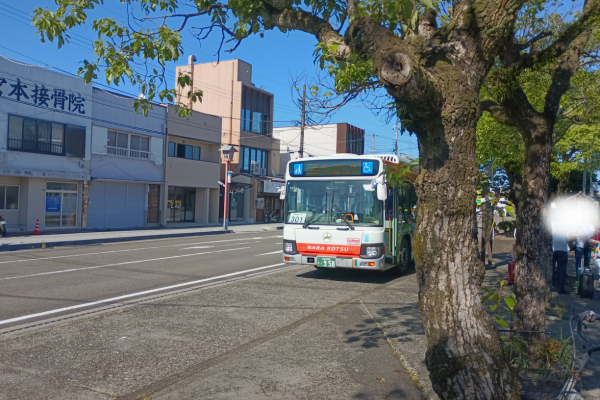
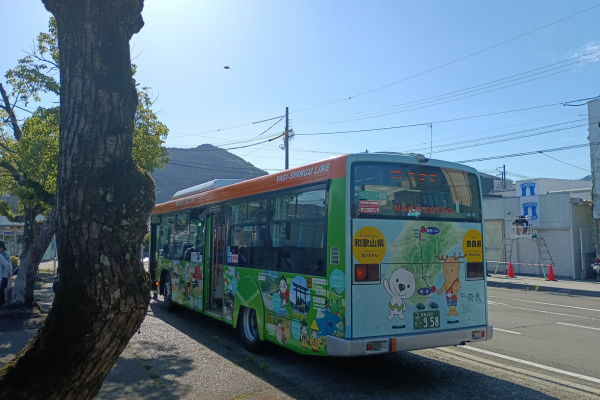
This is where we say goodbye to the bus that has been with us for 6 hours and 40 minutes.
When getting off the train,
the driver said,
“Thank you for riding with us. Are you feeling tired?”
I got the kind words from the driver,
who must have been far more exhausted than any of us passengers.
I, hiikun, would also like to say a few words.
“Thank you, Mr Driver, for driving safely and taking us all the way to our final destination.”
That concludes our journey along the Yagi-Shingu Line.
But since this is a day trip,
I have to get back to Osaka today.
I’ll cover the rest of the journey from Shingu in my next post.
Summary
Distance traveled: 169.3 km
Total time: 6 hours 40 minutes
Our journey on the Yagi-Shingu Line, Japan’s longest bus route, has come to a successful conclusion.
It was so much fun that time just flew by.
I was able to see many stunning views and famous sights from the train window.
Thanks to the in-train announcements and the driver’s sightseeing commentary, I never got bored for a moment.
While enjoying the spectacular views,
I witnessed the painful and tragic history of the area along the railway line.
This is the Kii Peninsula Flood Disaster,
which occurred between late August and early September 2011,
the same year that the Great East Japan Earthquake struck.
Due to a major typhoon, which caused river flooding, landslides, and other incidents,
the areas along the railway line suffered extensive damage.
Many houses and buildings collapsed.
Many people passed away.
Even now, 15 years after the flood,
along the railway line, there were several signs of flood damage, including traces of landslides.
The driver mentioned the flooding.
I believe that, among the natural disasters that occurred in 2011,
along with the Great East Japan Earthquake, the Kii Peninsula Floods must never be forgotten.
The areas along the Yagi-Shingu Line face many challenges, including natural disasters and population decline.
There were even rumors that it might be discontinued.
In spite of that, this bus route keeps the operation.
I can’t thank the drivers at Nara Kotsu enough.
Although this route tends to be viewed primarily as a tourist attraction,
it is also a vital means of transportation for local residents.
As long as there are people who need it,
while I hope that this wonderful bus route will continue to operate in the future,
I conclude this article.
Thank you very much for reading to the end.
≪Notice≫
I am pleased to announce a partnership with “N.S.I. Manati Swimming School, Mukō City” and
I have agreed to establish a reciprocal link partnership.
To all of you who regularly read this blog,
if you’d like, please be sure to check out the column below!!
参考:水泳平泳ぎのコツで初心者が速くなる!足キックとタイミング完全ガイド – コラム
In addition to the column mentioned above, it has many other columns related to swimming.
参考:N.S.Iマナティスイミングスクール向日市
≪Advertisement≫